

Codexai #28: Why Studying Computer Science Still Matters (Even If AI Writes 90% Of Your Code)
Insights from Mehran Sahami

If you’ve been scrolling through tech Twitter or LinkedIn lately, you’ve probably seen the same hot take over and over:
“AI will write all the code. Computer science is dead.”
I get why that line goes viral.
Fear always travels faster than nuance.
But here’s the truth nobody’s tweeting:
AI didn’t kill computer science. AI made computer science more important than ever.
And today’s issue is the proof.
Let me take you back to a surprising clip I watched recently—an interview with Mehran Sahami, one of Stanford’s most loved computer science professors.
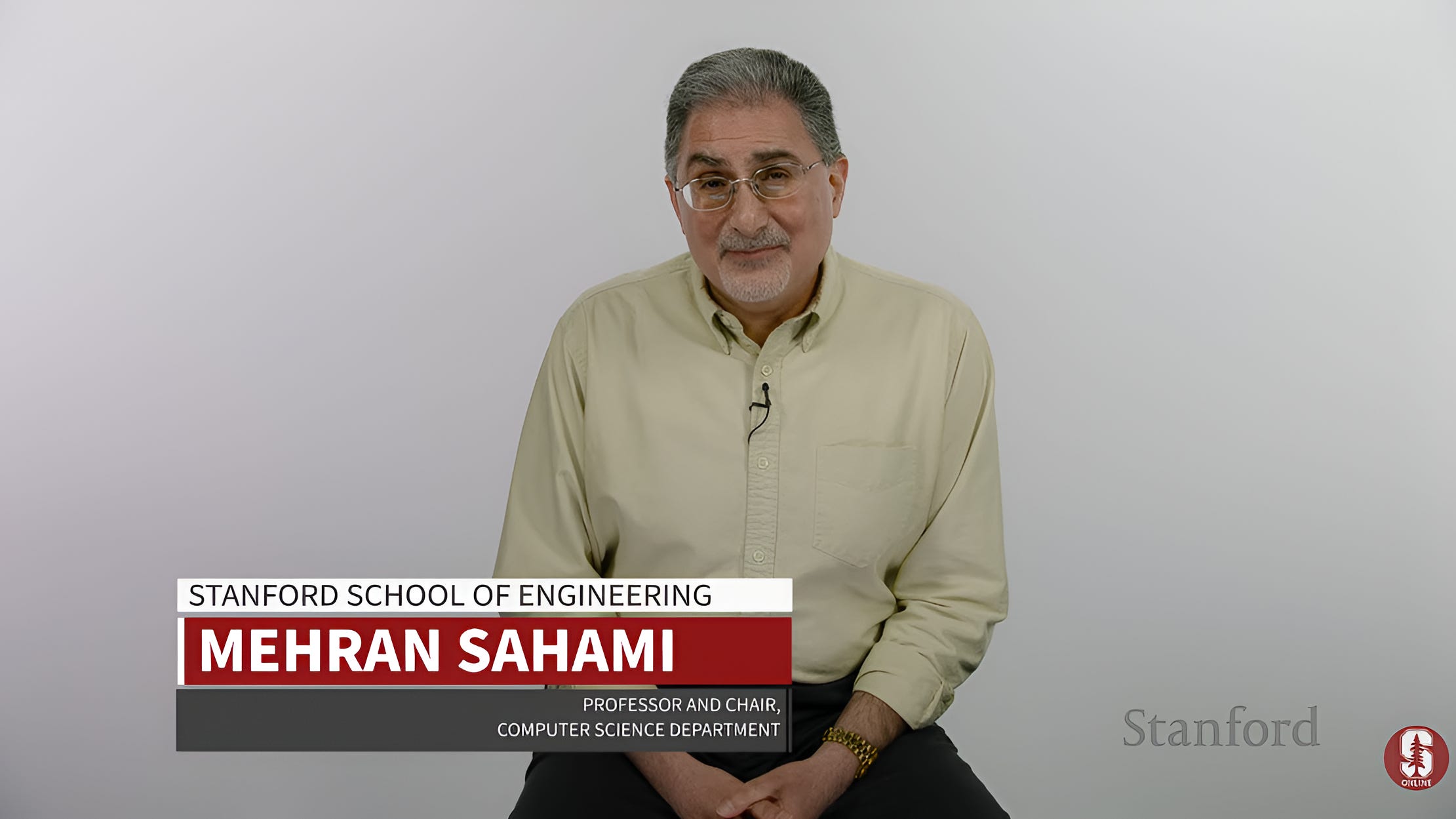
His take on AI wasn’t fear-driven or hype driven.
It was grounded.
Clear.
And deeply human.
The kind of clarity people crave right now.
So I’m reshaping his message for you: the modern developer, creator, or builder in the AI era.
Let’s break it down.
AI Is Not “ChatGPT”—And Coding Is Not “Typing Code”
Mehran starts with a question many are secretly too afraid to ask:
“When people say AI, do they just mean ChatGPT?”
It’s funny because it’s true.
We’ve boiled down an entire field to one shiny interface.
But AI runs deeper than what we chat with. AI is everywhere:
Your spam filter deciding which emails you never see
Your bank detecting suspicious transactions
Your YouTube and Netflix queues shaping what you watch next
ChatGPT is the storefront.
AI is the whole city.
And yet, when Anthropic said “90% of code will be written by AI,” people panicked.
“If AI writes the code, what’s the point of studying computer science?”
This is where Mehran dropped one of the most important reminders of the decade:
Code Is Not the Point. Thinking Is.
Computer science classes aren’t just teaching you how to code.
They’re teaching you how to think.
And that mindset of algorithmic thinking, abstraction, and problem decomposition is the foundation of everything you’ll build in the AI era.
Think of it this way:
Learning CS isn’t about becoming a coder.
It’s about learning how to think clearly when the world gets noisy.
Almost every world-class builder whether it’s Jensen Huang, Patrick Collison, or Naval. They talks about the value of thinking in systems and abstractions.
That’s CS. Not syntax. Not semicolons. But thinking.
AI can write code. AI cannot think for you.
Not yet!
And not for a long time.
Why Python Still Matters (Even If You Don’t Want to Be a Programmer)
Another question that surfaces every week:
“Programming languages change… why learn Python?”
Because Python isn’t just a language.
It’s an interface to modern problem-solving.
It’s used in most of the things, like:
AI
Research
SaaS MVPs
Prototyping
Data science
Web automation
When ChatGPT writes 80% of your code, Python helps you understand what you’re reading.
It’s like English for the tech world.
Easy.
Flexible.
Widely adopted.
You don’t learn Python because it’s trendy.
You learn Python because it will unlock everything else.
AI Makes You And Your Mistakes, Faster And Dumber
Here’s something that shocked me:
A Stanford team studied two groups—one coding with AI assistance, the other coding manually.
The AI group:
Wrote code faster
Felt more confident
Solved more problems
Sounds great, right?
Except for one twist:
Their code was less secure.
Speed without understanding is a trap.
Confidence without knowledge is dangerous.
That’s why knowing the basics still matters.
Not for prestige.
Not for gatekeeping.
But for verification.
AI can produce 100 lines of code.
But only you can tell if it’s right.
And in a world where one bug can cost companies millions, verification becomes a superpower.
“But I’m Too Old To Learn This”
No, You’re Not!
The most heartwarming moment in the video’s transcript was, a 60-year-old person asks if it’s “too late” to learn computer science.
Mehran laughs gently and says:
“I’m almost 60. I barely remember division. But I still program.”
And he’s right.
Coding is not math.
It’s not age-restricted.
It’s not “for the gifted.”
It’s like learning guitar, or cooking, or chess.
You start. You try things. You get stuck. You improve.
You don’t need a math degree.
You need curiosity.
The world doesn’t reward the smartest people anymore.
It rewards the learners.
The experimenters.
The ones who pick up new tools without fear.
Age has nothing to do with that.
Why Understanding Code Makes You Valuable)
There’s this universal question every beginner has:
“Why does code work one day and break the next?”
Because software is not a single thing.
It’s a system.
A living ecosystem.
Servers go down.
Libraries update.
Functions get deprecated.
APIs fail.
Dependencies change.
The internet hiccups.
This is why programmers laugh when a random bug gets fixed by “turning it off and on.”
Behind the scenes, there’s an entire planet of moving pieces.
Understanding that complexity (not memorizing syntax) is what makes you dangerous in the AI economy.
Builders who understand systems will always outpace builders who only know prompts.
The Most Important Lesson:
Ethics isn’t optional anymore.
This is the part most people skip.
Teaching CS isn’t just about logic and loops.
It’s also about: fairness, opportunity, consequences, power.
AI influences jobs, decisions, livelihoods, narratives, elections.
If we don’t understand the technology, we can’t shape the ethics.
Good people learning tech is how society stays balanced.
This is one of the reasons I created Codexai in the first place:
To help regular people, students, creators, indie hackers build things responsibly, intelligently, and with clarity.
Not blind hype.
Not blind fear.
Just clear-eyed understanding.
And yes—be nice to ChatGPT.
Not because AI will rebel.
Because you will become kinder.
The interview ends with a funny question:
“Should we be nice to ChatGPT in case AI rebels?”
Mehran laughs and says: No
But…
maybe just be nice in general.
And I love that.
Because behind all the noise, the tweets, the breakthroughs, and the fears. The point of learning computer science is simple:
To build better things. For a better world.
AI won’t replace people who think clearly. AI will empower them. And if you’re reading this, you’re already ahead.
If You Take One Thing Away From This Issue, Then
Let it be this:
Learning computer science isn’t about coding.
It’s about understanding the world you now live in.
You’re not late.
You’re not behind.
You’re not underqualified.
You’re early.
Because most people are still stuck in fear while you’re here learning the fundamentals of the new era.
Keep going.
Your future self will thank you.
If this issue gave you clarity…
Here are two tiny things that help Codexai grow:
Reply to this email with “CS makes sense now”—I read every reply personally.
Share this issue with one friend who’s panicking about AI “taking all the jobs.”
It helps more than you think.
See you inside the next issue.
Manas 🥂
Founder, Codexai
PS: If this issue sparked questions in your mind, reply with one question. I’ll answer it personally, and if the question is deep, I’ll turn it into a premium lesson.
Explore the 1:1 sessions here: Book Your Breakthrough, NOW!!!
Here’s the link to read previous issues:
Totally agree with what you have conveyed in this blog, but still, people have their uncertainties about studying or not!
Q: How do you think different areas of subjects in a vast and booming field like Computer Science influence how people decide whether to study or not?